
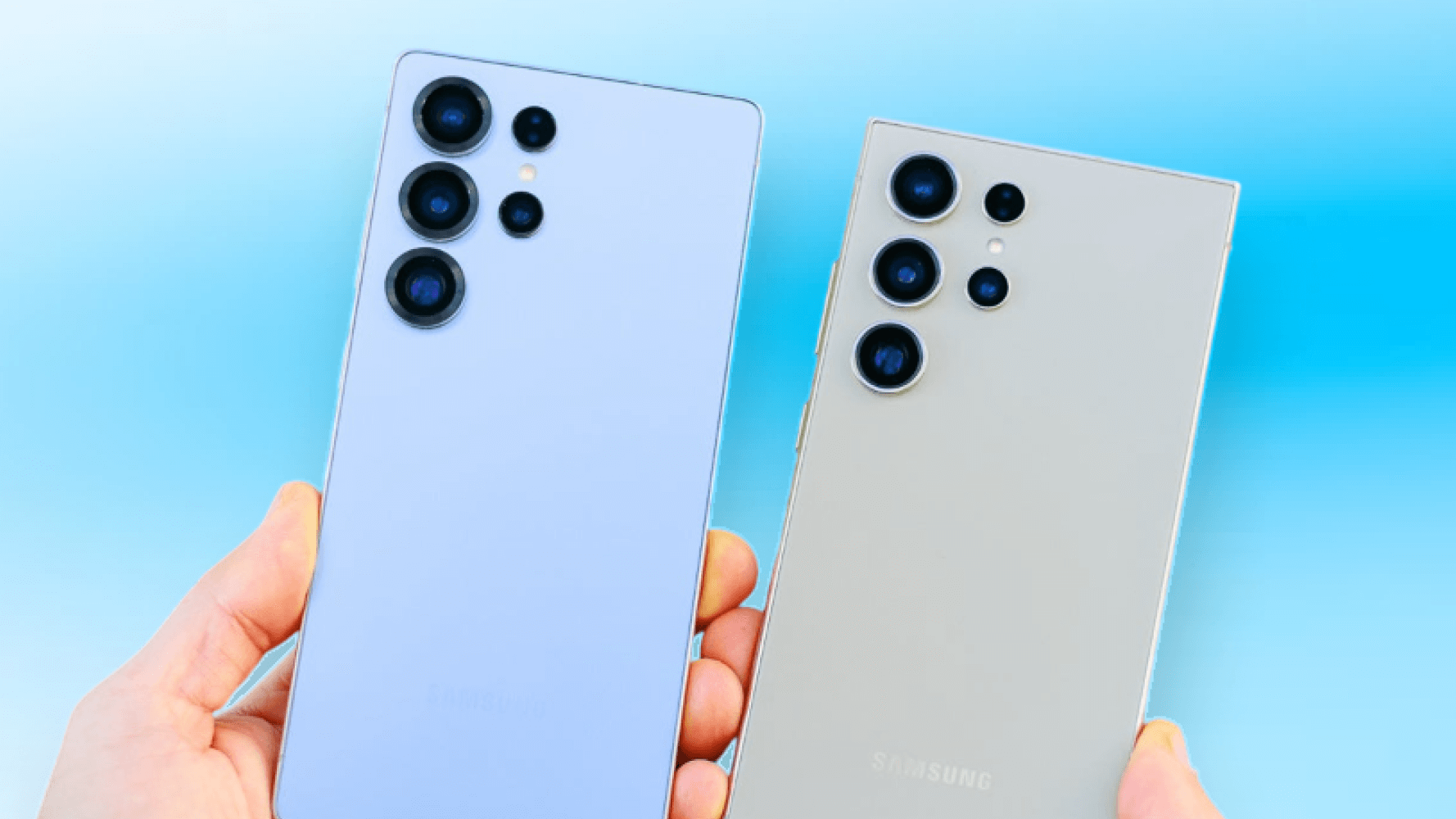
Samsung has officially launched the Galaxy S25 Ultra, and at first glance, it follows a familiar pattern—incremental upgrades rather than a dramatic leap forward. With a new flagship chipset, refined design, slight battery and charging improvements, and a refreshed ultrawide camera, the S25 Ultra aims to build on the solid foundation laid by the Galaxy S24 Ultra. However, the changes raise an important question: is the upgrade truly worth it, or does last year’s model still offer better value?
Design & Build
Both phones remain unmistakably “Ultra” devices—large, premium, and Note-like. The Galaxy S25 Ultra is marginally slimmer and lighter, making it more comfortable to hold despite its size. Samsung has also upgraded materials, introducing second-generation Gorilla Armor glass and stronger grade 5 titanium, improving durability on paper. Both models retain IP68 water and dust resistance.
One notable downside for the S25 Ultra is the S Pen. While it still supports precise writing and drawing, Samsung has removed Bluetooth connectivity. This means no air gestures or remote camera shutter—features that remain available on the Galaxy S24 Ultra, making the older model more versatile for power users.
Display
The S25 Ultra’s display grows slightly to 6.9 inches from 6.8 inches, but the difference is barely noticeable. Both phones offer a 120Hz LTPO AMOLED panel with the same resolution, brightness levels, and HDR10+ support. In real-world use, display quality is nearly identical, with excellent brightness and Samsung’s signature anti-reflective coating.
Battery & Charging
Battery capacity remains unchanged at 5,000mAh on both devices. The S25 Ultra shows small gains in battery endurance, particularly during video playback and gaming, but the improvement is modest. Wired charging stays capped at 45W, with only a minor speed advantage for the newer model. Wireless charging sees a slight upgrade on the S25 Ultra with Qi 2.1 support, enabling better magnetic alignment—but this remains a niche benefit for now.
Audio & Performance
Speaker loudness is identical on both phones, though the S25 Ultra delivers slightly richer sound. Performance is where the newer device clearly pulls ahead. Powered by the Snapdragon 8 Elite chipset, the S25 Ultra posts significantly higher benchmark scores and improved AI processing. That said, the Galaxy S24 Ultra remains extremely capable and will stay relevant for years, especially with Samsung’s promise of seven years of software updates on both devices.
Cameras
Camera hardware is largely unchanged. The main 200MP sensor and telephoto lenses are the same, while the ultrawide camera on the S25 Ultra gets a higher-resolution 50MP sensor. In practice, photo quality differences are minimal. Daylight shots are nearly identical, zoom performance is very close, and in some cases, the S24 Ultra produces sharper images. Low-light photography is a mixed bag, with neither phone clearly outperforming the other.
Video capabilities are similar as well, though the S25 Ultra adds niche features like 10-bit HDR, Log video mode, and higher frame rates on the ultrawide camera.
Verdict
The Galaxy S25 Ultra is undeniably the more powerful and refined device, offering small improvements in performance, materials, speakers, and battery life. However, the upgrades are incremental rather than transformative. The removal of key S Pen features and the near-identical camera experience make the decision less straightforward than usual.
For buyers looking for the latest hardware and maximum performance, the S25 Ultra is still the top choice. But for value-conscious users, the Galaxy S24 Ultra remains an excellent option—nearly as capable, more feature-rich in one key area, and likely available at a significantly lower price. In 2025, choosing last year’s Ultra might actually be the smarter move.