
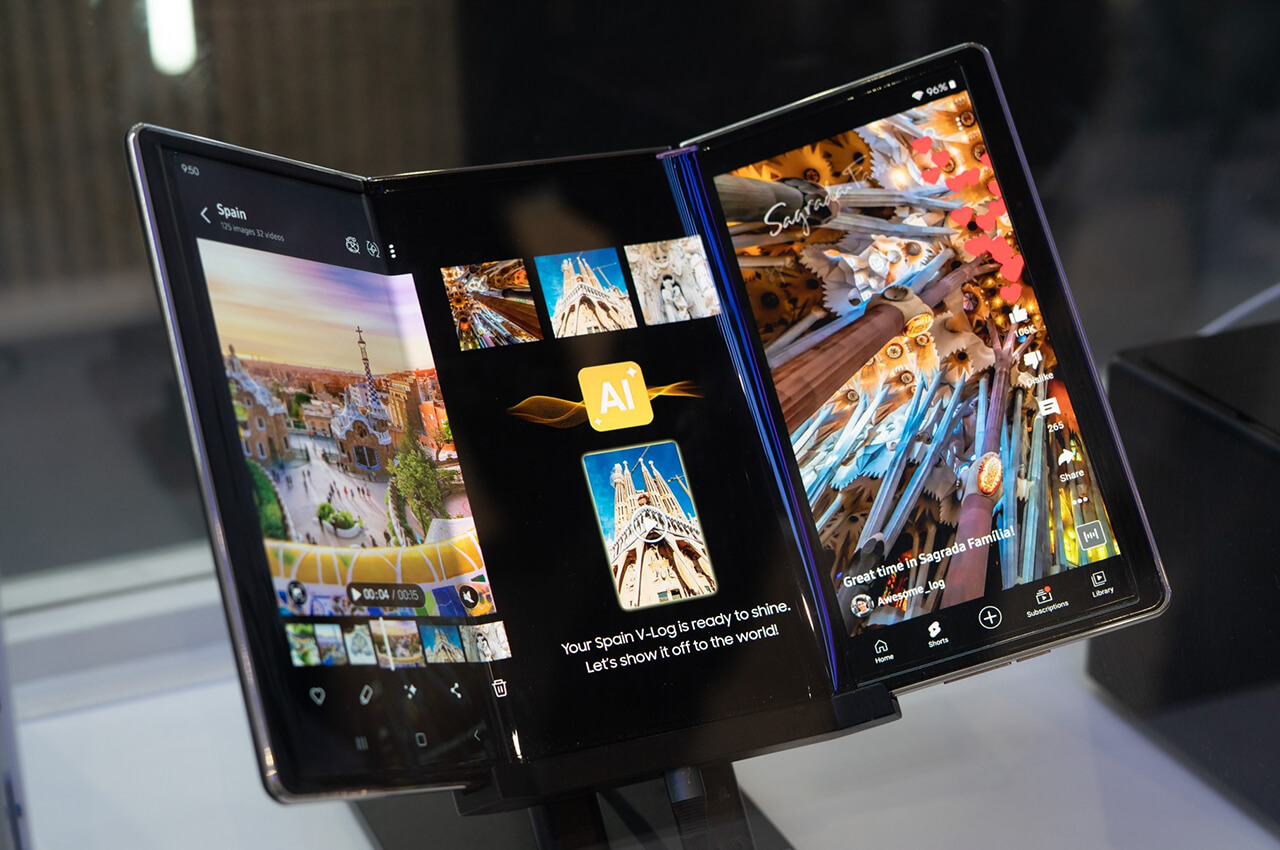
Samsung has once again pushed the boundaries of smartphone innovation with the official unveiling of the Galaxy Z TriFold, a next-generation tri-folding smartphone that represents a major leap beyond current foldable designs. Announced in December 2025, the Galaxy Z TriFold introduces a bold new form factor that blends the portability of a smartphone with the productivity of a tablet, redefining how users interact with mobile devices.
Unlike traditional foldables that open once, the Galaxy Z TriFold features a three-panel folding mechanism, allowing the display to expand up to nearly 10 inches when fully unfolded. This massive screen uses Samsung’s advanced Dynamic LTPO AMOLED technology, delivering a smooth viewing experience with adaptive refresh rates, HDR support, and peak brightness levels reaching up to 1600 nits. Whether watching videos, multitasking, or working on documents, the TriFold offers a tablet-like experience while still folding down into a compact form that fits in a pocket or bag.
Samsung has clearly designed the Galaxy Z TriFold with productivity and multitasking in mind. The tri-fold architecture allows users to run multiple apps side by side with improved window management, making it ideal for professionals, creators, and power users. Tasks such as editing documents, responding to emails, and attending video calls can now happen simultaneously on a single device without feeling cramped.
Under the hood, the TriFold is powered by Qualcomm’s Snapdragon 8 Elite chipset, ensuring top-tier performance for gaming, productivity, and AI-based features. Support for Wi-Fi 7, advanced connectivity standards, and enhanced cooling systems further positions the device as a premium flagship. Samsung has also equipped the phone with a robust camera system, highlighted by a 200MP primary sensor, enabling high-resolution photography and advanced computational imaging.
From an industry perspective, the Galaxy Z TriFold signals Samsung’s commitment to leading the foldable market and expanding it beyond niche adoption. By introducing a tri-fold design, Samsung is no longer just competing with other smartphones — it is positioning foldables as a bridge between phones, tablets, and portable computers. While pricing and durability concerns remain topics of discussion, the TriFold sets a clear direction for the future of mobile computing and solidifies Samsung’s role as a pioneer in form-factor innovation.